Equipment Needed:
- The Blakemore Tube
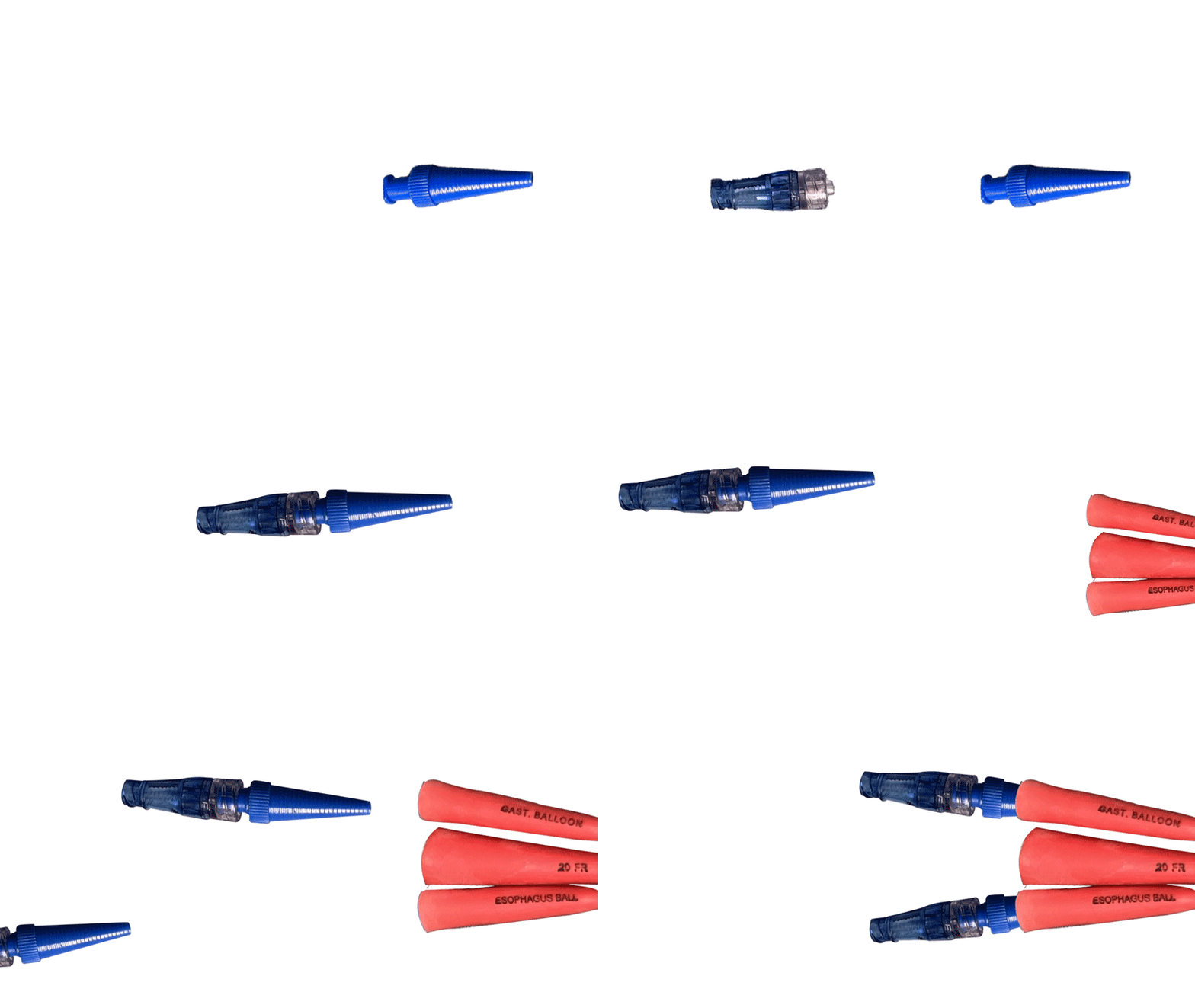
- 2 Luer Tip Catheter Adapters
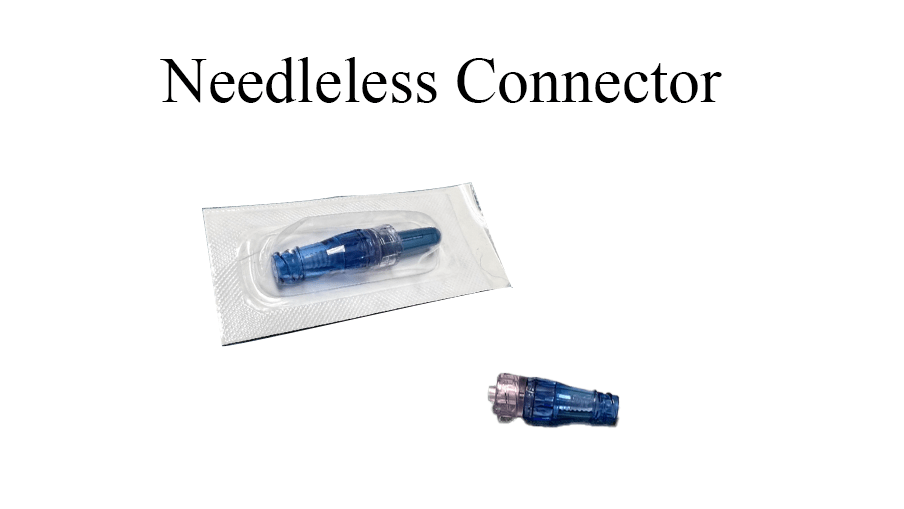
- 2 Needleless Connectors
- A manometer
- 2 Hemostats
- 60 ml Syringe (or similar large volume syringe)
- X-ray
- Tube Tamer or kerlix and a bag of saline
Steps:
- If you have a frozen Blakemore tube, it won’t stay that way for long. Have everything together that you need for placement before you get the tube out of the freezer. If you don’t have a frozen tube, do the best you can.
- Have someone get the manometer from cardiopulmonary. The RT’s are familiar with it because they use it to check for cuff leaks in intubated patients. It can be found here.
- Pull the white plugs out of the ends of the Blakemore Tube. This goes better if you work your fingers around the edge in small prying motions rather than gripping the white plug and trying to pull it out directly.
- Attach the needleless connectors to the luer tip catheter adapters, then wedge those into the esophageal and gastric balloon ports of the Blakemore Tube. (**If you don’t have that set up, you can inject air directly into the ports with a toomey syringe and then clamp them with hemostats. It’s a ‘messier’ process because of air leaks, but it will work in a pinch**)
- Put the tube into the stomach. This can be difficult, it’s like pushing a spaghetti noodle.
- Once it’s to a depth of 50 cm, inflate the gastric balloon with ~ 50 ml of air and get a chest x-ray to ensure that it’s in the stomach.
- Once gastric placement is confirmed, put a total of ~ 250 ml of air into the gastric balloon and pull traction.
- Traction can be achieved with a tube tamer just like an ET tube. Another option is to connect a length of kerlix to the Blakemore Tube on one end and to a liter of saline on the other. Then, loop that over an IV pole and let the weight of the saline provide the traction.
- Many times, this will do the trick because the varices are often at the gastro-esophageal junction. If you need to inflate the esophageal balloon due to ongoing blood coming up from the esophagus despite the gastric balloon being in place, use the manometer and inflate the esophageal balloon to ~ 40 cm H20. The manometer will plug directly into the needleless connector.
- Clamp the tubes with hemostats (disposable ones preferably as the patients will be transferred and we will never see the equipment again). The luer tip catheter adapters seem to hold a seal very well, but the clamps would be more reliable for the long haul.
YouTube videos and lots of thoughts on this procedure can be found on another page, but this is the quick version you’d need in a hurry. Good Luck.


 Searcy EM