I’ve written posts before about times that the cardiac monitor disagrees with the pulse oximeter as to how many times the heart is beating. In the prior post, it was due to PVC’s. This time it is something different…

I’ve written posts before about times that the cardiac monitor disagrees with the pulse oximeter as to how many times the heart is beating. In the prior post, it was due to PVC’s. This time it is something different…
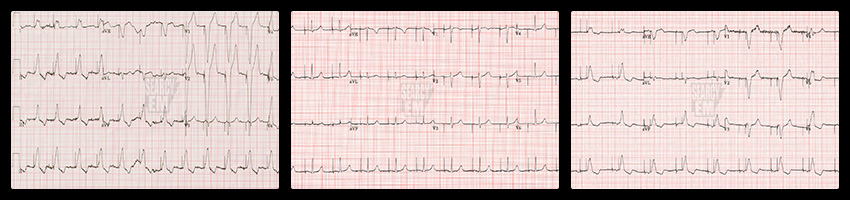
Not all “Paced” EKGs are the same. Let’s look at some of the differences among them.
Continue readingWe had something come up twice over the past month or so with our ECGs. Several of the residents had trouble spotting the issue. I bet they were not the only ones. Can you see the problem?
Continue readingA 45 year-old man presents by EMS after a VF arrest. On arrival at the ED he has a pulse. An ECG shows an anterior STEMI. The cath lab is activated and the cardiologist is en route. While waiting for the cavalry to arrive, you ultrasound his heart and strike gold.
Continue readingTwo brave souls took a stab at it. Both accurately found that number 3 was the one with the leads in the correct places. Both had other things correct as well. Neither had all of the answers. To finish it up, I’ll give you some food for thought and see if anyone can put it all together.
Continue reading
There is clearly ST elevation in leads V1-V3. Are we activating the cath lab based on this EKG?
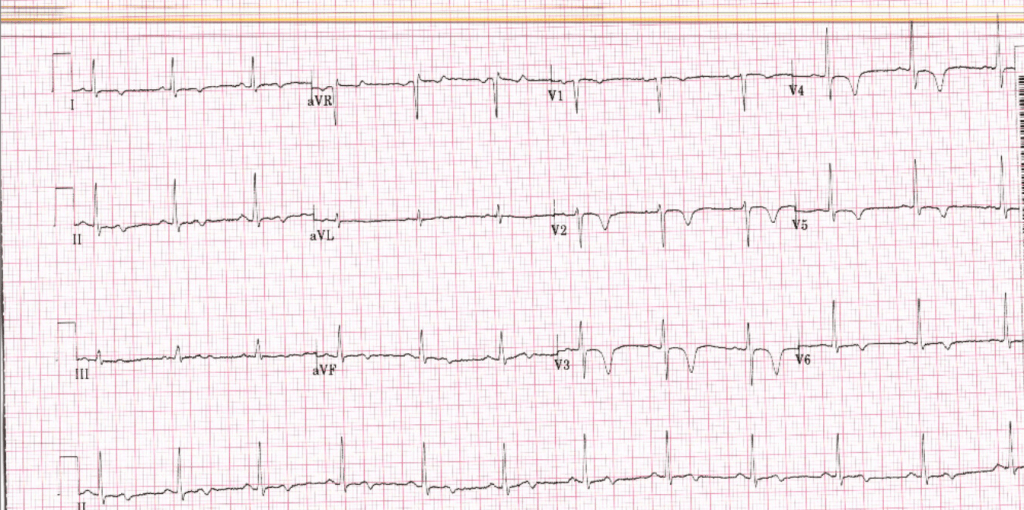
Wellens’ syndrome it is. (For completeness sake, Dr. Wellens has an “s” a the end of his name – it is not “Wellen’s syndrome” it is “Wellens’ syndrome.” And, whether one should use the apostrophe or not with an eponymous syndrome is debatable. Some sources omit it completely: “Wellens Syndrome” but not “Wellen syndrome” – I feel better now that that’s off my chest.)
Continue reading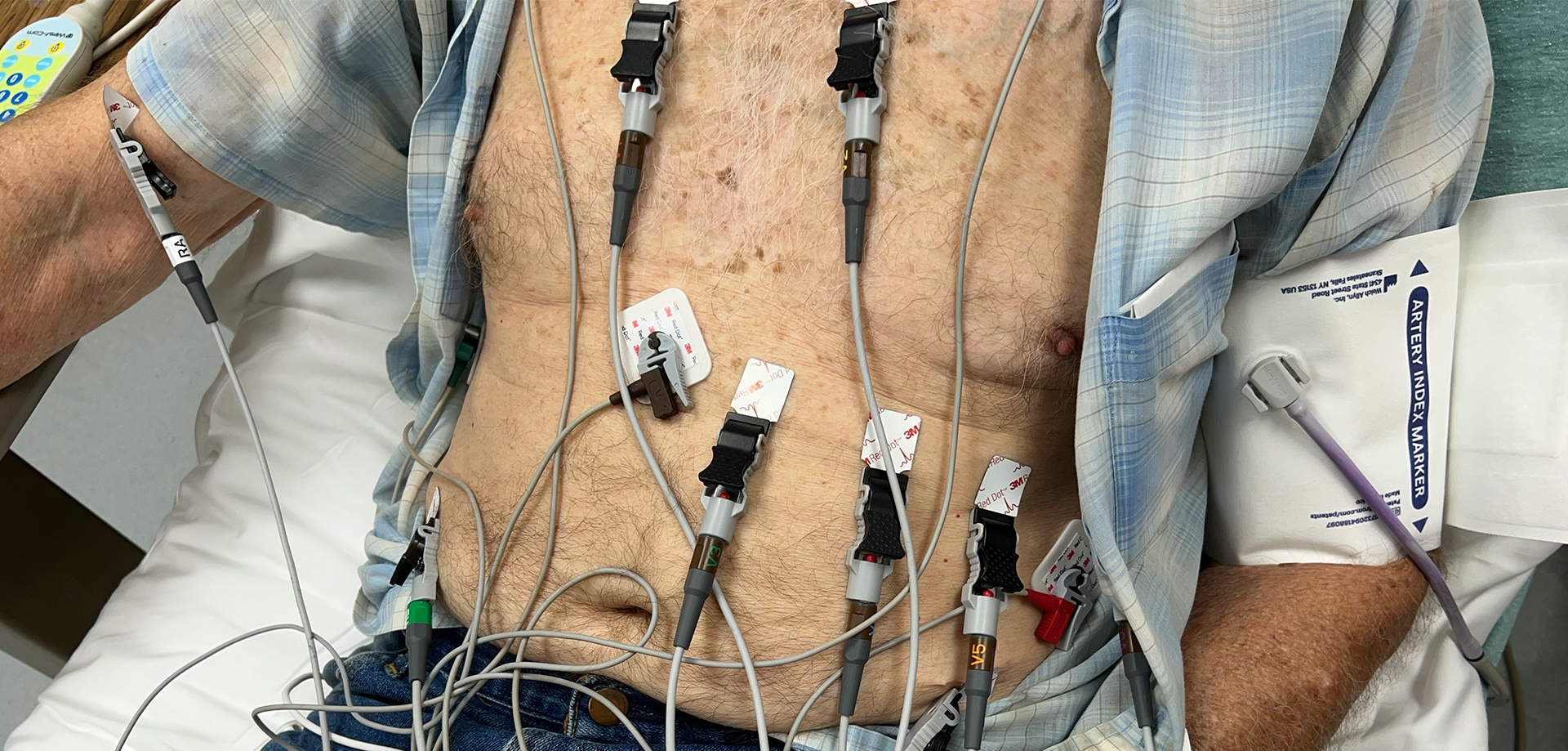
 Searcy EM