Details…
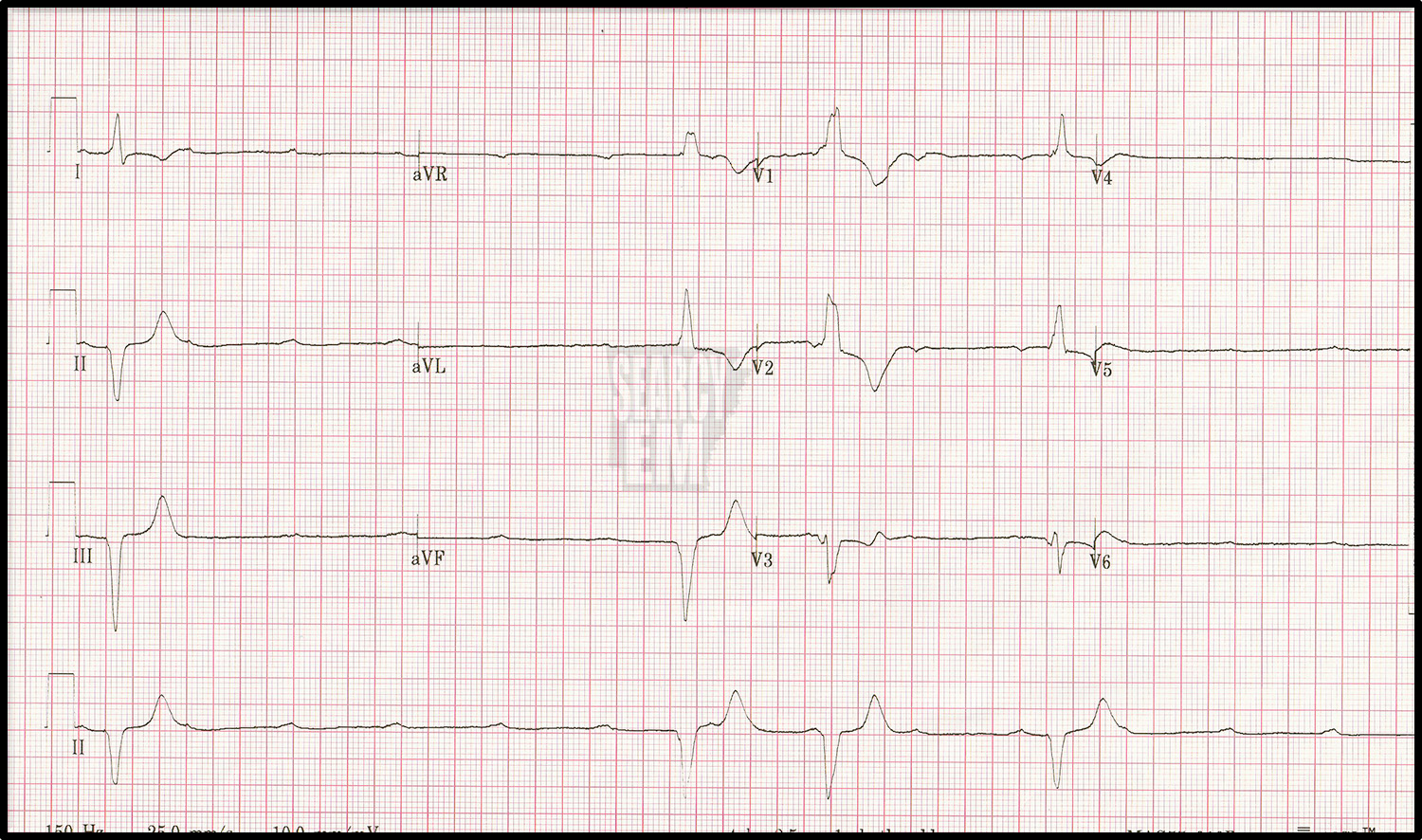
There certainly are lots of nonconducted P waves. However, there is not true “AV dissociation” as the escape rhythm is not regular. That probably means that a P wave is getting conducted occasionally, which would actually indicate a high-grade second degree block. It’s tough to say that any of the QRS complexes are related to a preceding P wave, though. Luckily the distinction is largely academic since we treat high grade second degree blocks the same way we treat third degree blocks.
caveat
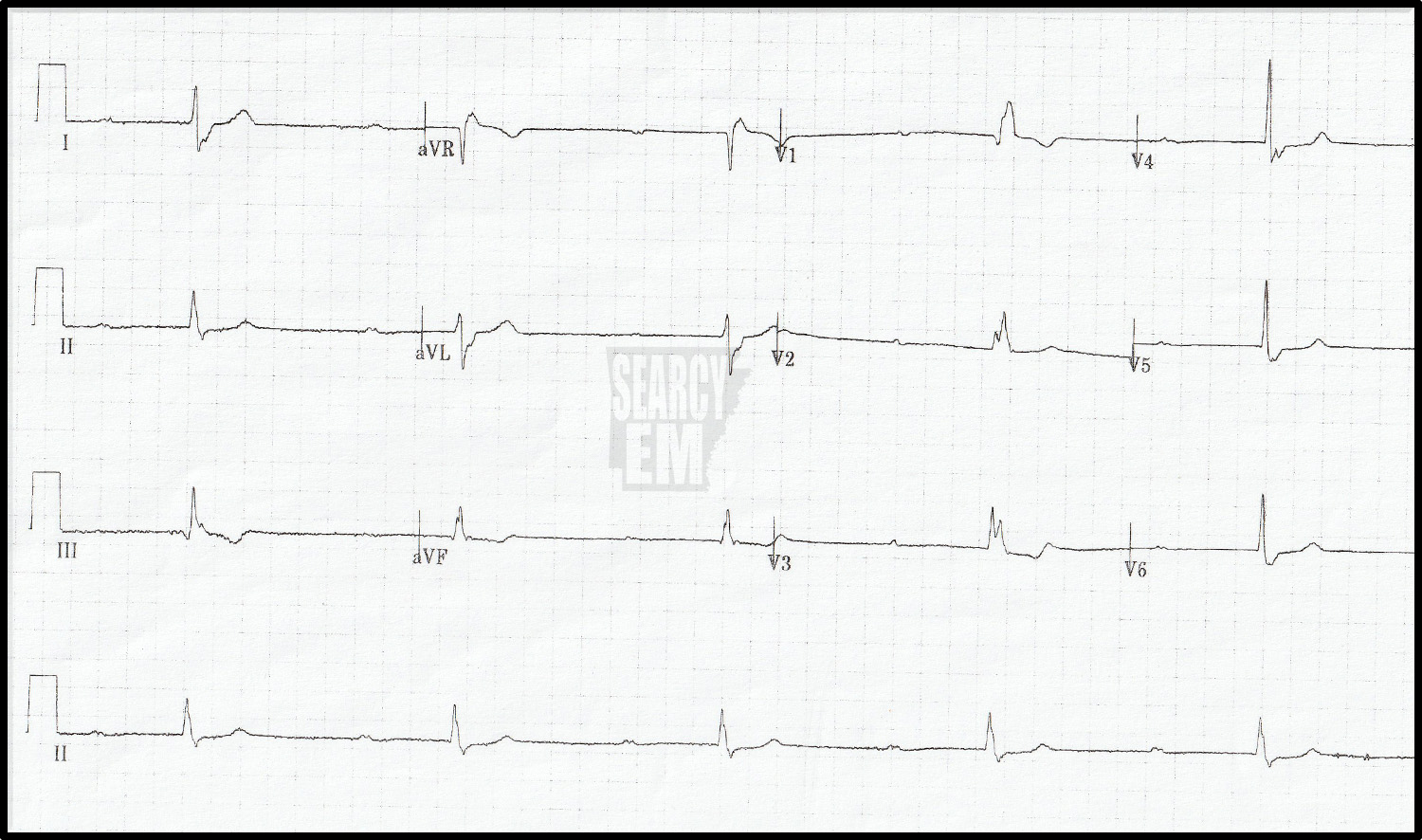
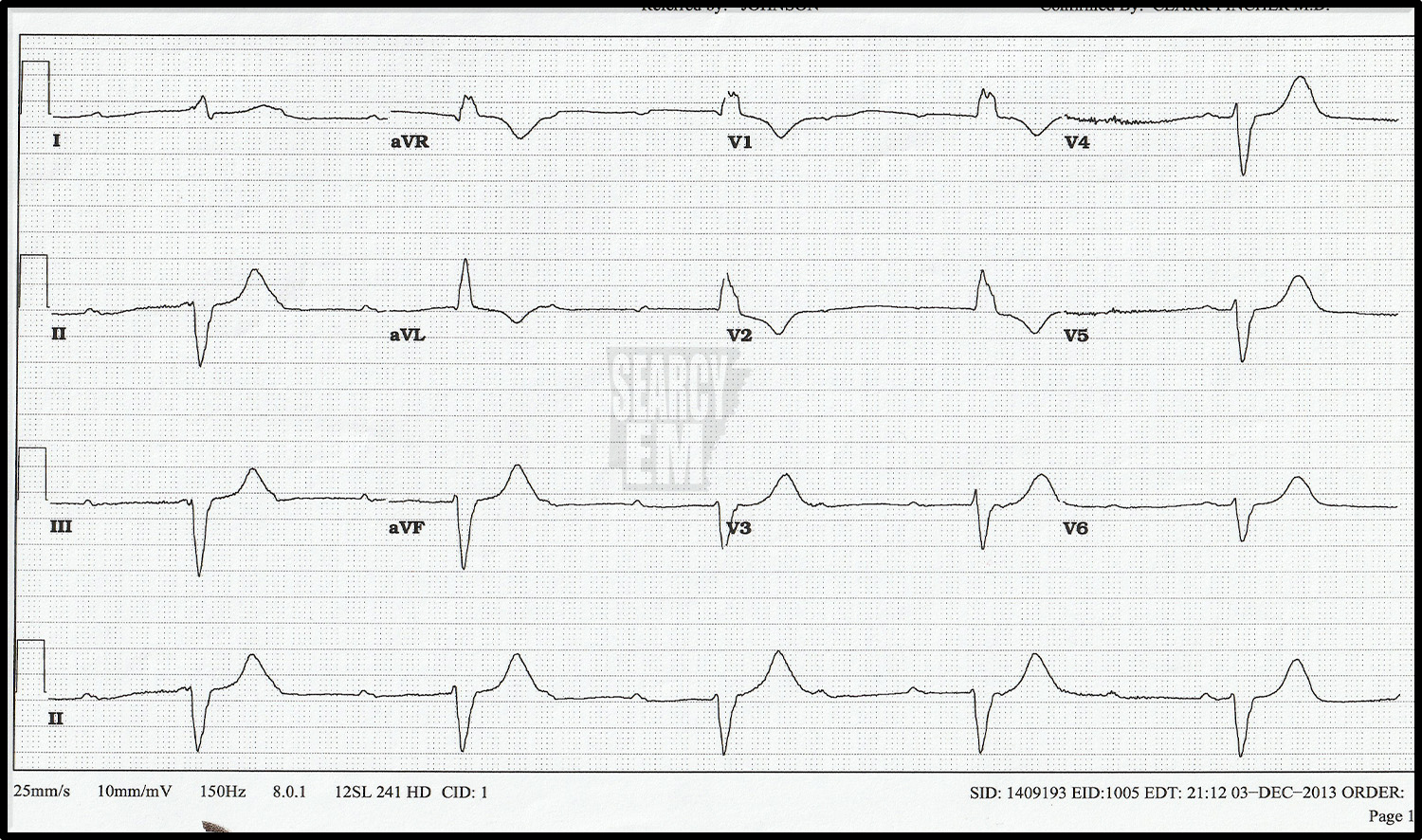
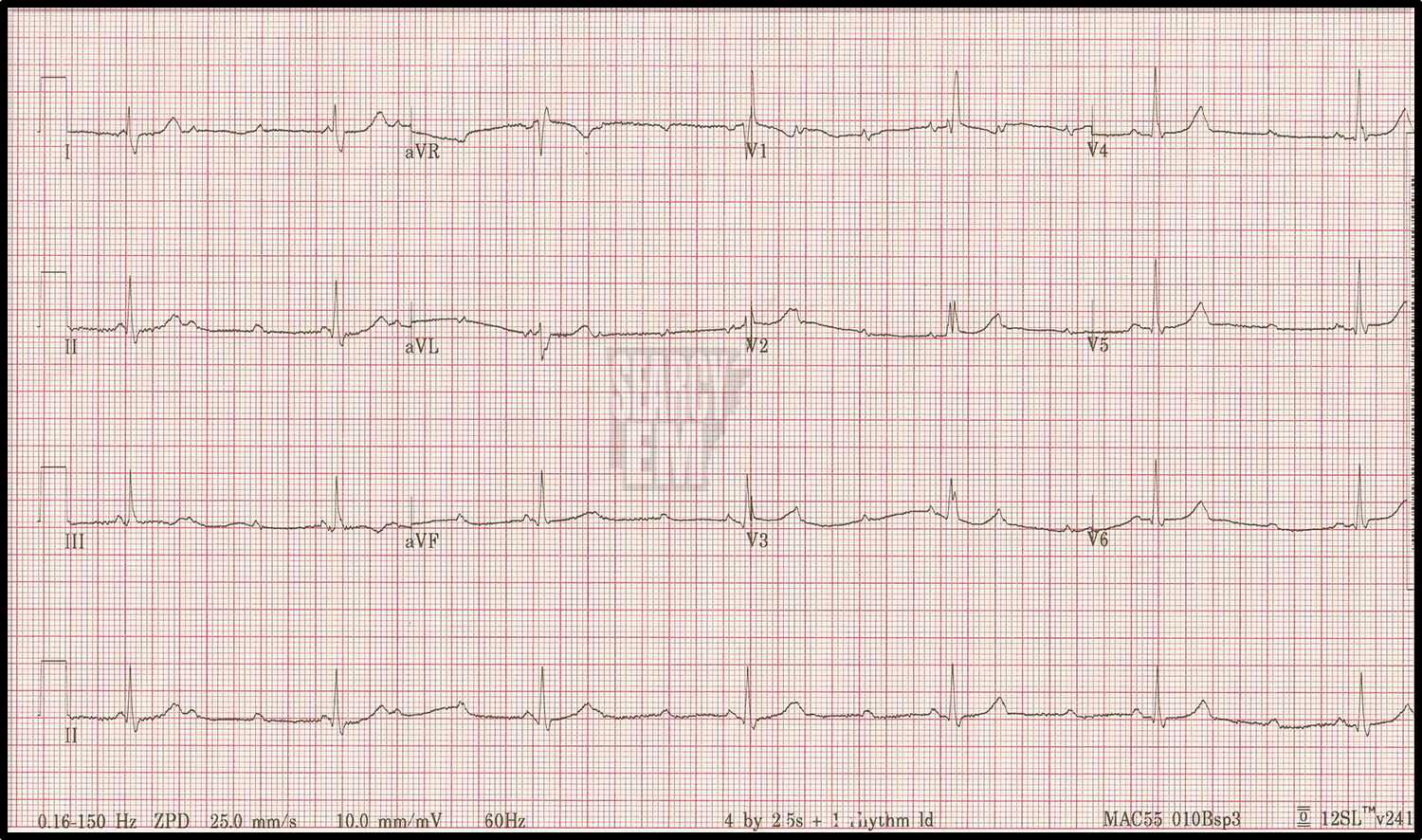
The escape rhythm is narrow complex and at first glance it does seem that the QRS complexes seem to fall after P waves with a similar PR interval. Those things would indicate a second degree block. However, if you notice the PR interval before the first two QRS complexes, they are too short to be conducted. The last two QRS complexes, on the other hand, have PR intervals that could have been conducted, so those ‘could have’ been sinus beats, which would make this a high grade second degree block. However, the RR intervals are the same across the ECG and are unrelated to the PP intervals. That tells us there is AV dissociation, which means it is a third degree block with an escape rhythm originating from within the conducting system, because the QRS complex is narrow.
 Searcy EM