The Arkansas Department of Health has loosened their regulation on who qualifies for monoclonal antibodies as a treatment for COVID-19. They released an updated list of qualifications on July 19. I’ll list them here and add a link to download the entire document.
Continue readingAuthor: Jeffery Steele
Name that block
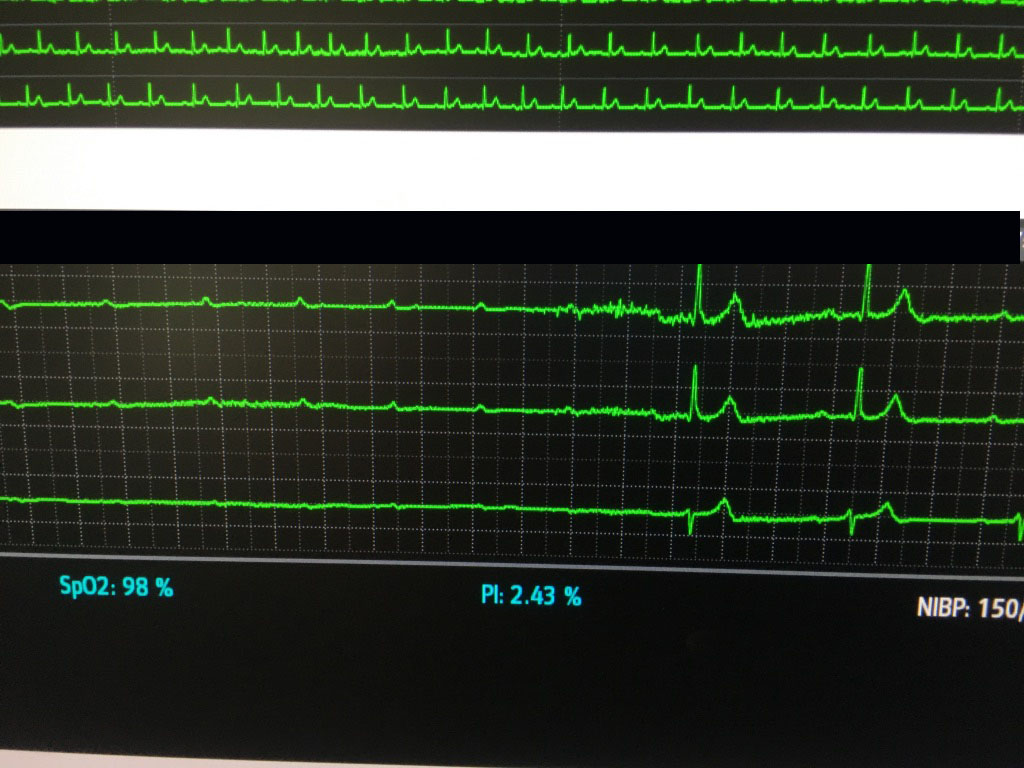
Ventricular Tachycardia and adenosine
Supraventricular Tachycardia with abnormal conduction (“aberrancy”) is often difficult to distinguish from Ventricular Tachycardia. The 2015 AHA guidelines on the management of adults with SVT state that the presence of AV dissociation (i.e., the presence of P waves visible among the QRS complexes at a rate slower than the ventricular rate) or fusion/capture beats “provides the diagnosis of ventricular tachycardia.” Other criteria are suggestive, but not confirmatory. Diagnostic algorithms – Brugada or Vereckei for example, are complicated and can be difficult to apply.
Continue readingRoll Call
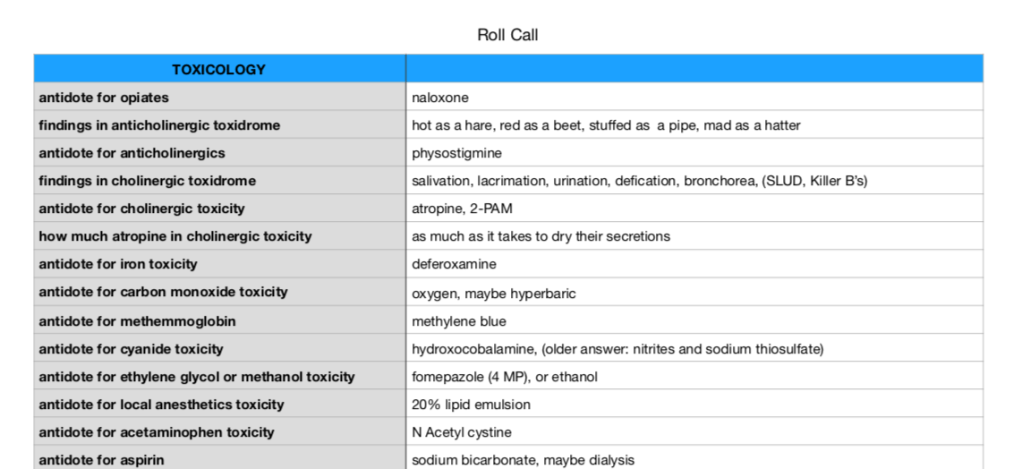
At the beginning of resident conference each week, we run through a list of common problems you might in encounter in the ED. It’s ‘open book,’ but is supposed to go really quickly – the whole list should take less than 10 minutes. Here is that list – the “roll call.” At this point we have 2 lists: one has general medicince / toxicology items, the other has EKG tidbits. We will alternate these every month or so and may add another one with antibiotics or whatever else seems to fit the format. Get familiar with it. These are things you will use for the rest of your life.
How to follow the blog
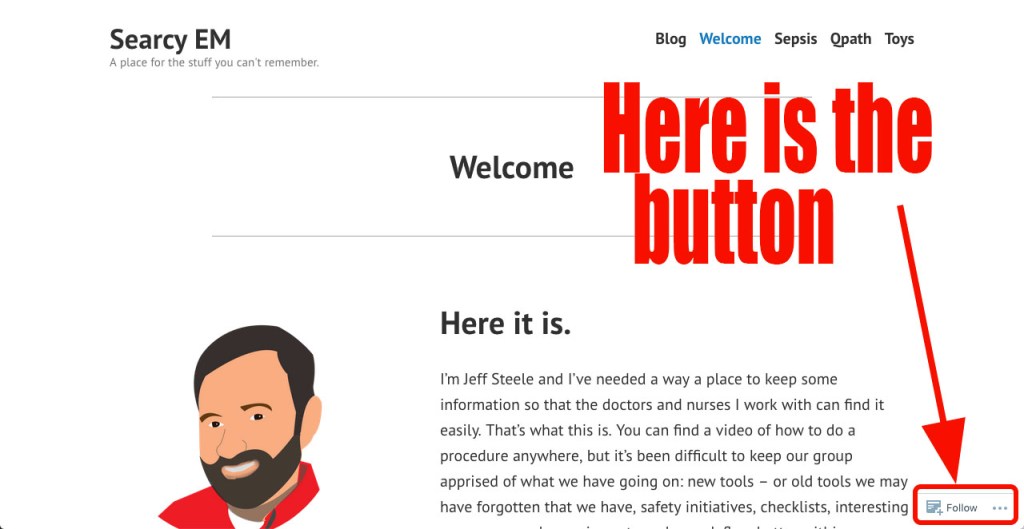
For any non-blog-savvy folks (of which I am one), the simplest way to follow the blog is to click the “follow” tab that shows up in the bottom right corner when you open a page. No need to create a wordpress account – just enter your email address. Then you will receive an email with a link to confirm. Click it, and that’s it. You will get emails whenever a new post is added. For whatever reason, the “follow” button goes away as you scroll down a page but comes back if you scroll up.
Stitches
Here is a video about some of the common mistakes we see learners make. It’s not “how to tie a knot,” but rather some of the other steps in the process. It’s not exciting. It’s a little too long. I get it, but I bet there is something in it that you didn’t know you didn’t know.
Continue readingProcedural Sedation Checklist
You only need one sedation to go awry to realize that this is an area where an ounce of prevention is worth a pound of cure. We have an informal checklist you should use to make sure you have thought of every potential complication and planned for it accordingly. This particular checklist was made in-house and has not been formally validated. However, it was made after reviewing similar checklists from other departments, and it has been approved by our ED staff as well as anesthesia. Use it. It wards off evil spirits.
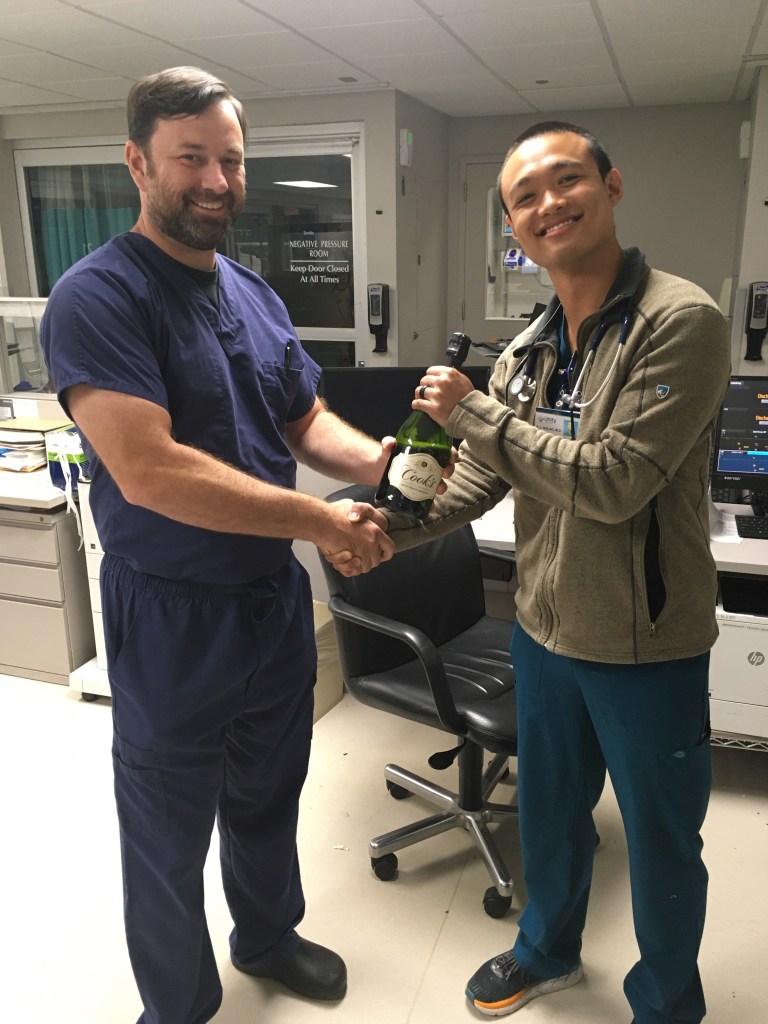
Continue readingNew member of the club
Median Nerve Block
One of the interns did this fantastic block. There are lots of examples of good technique here.
Continue readingSTEMI
The formal definitions of a STEMI are the following:
New J point elevation, in the absence of LBBB and LVH of:
- Greater than or equal to 1 mm in at least 2 contiguous leads EXCEPT leads V2 and V3
- Leads V2-V3 require:
- greater than or equal to 2.5 mm in men less than 40
- greater than or equal to 2 mm in men over 40
- greater than or equal to 1.5 mm in women
- Inferobasal STEMI’s (previously known as posterior infarcts):
- Isolated ST depression greater than or equal to 0.5 mm in leads V1-V3
- especially when the terminal T wave is positive
- If these are present, STEMI is confirmed by STE in posteror leads (V7-V9), which should be obtained:
- STE greater than or equal to 0.5 mm or
- STE greater than or equal to 1 mm in men < 40
- Reference:
- Govea A, et al. Interv Cardiol Clin. 2021 Jul;10(3):293:306.
 Searcy EM