Two brave souls took a stab at it. Both accurately found that number 3 was the one with the leads in the correct places. Both had other things correct as well. Neither had all of the answers. To finish it up, I’ll give you some food for thought and see if anyone can put it all together.
First, all of the changes were among the limb leads. Beyond that, consider the following and look back at the post to see if you can make sense of what would happen when you change the position of the leads. Changes involving the active electrodes (RA, LA, LL) can cause leads to “switch places,” become negative or remain unaffected. Swapping an active electrode with the neutral (RL), however, would affect how the machine interprets the directions of the vectors and calculates Wilson’s central terminus.
Swapping the Left Arm and Right Arm leads

- leads II and III switch places, but don’t change
- leads aVR and aVL switch places, but don’t change
- lead I becomes negative
- lead aVF is unaffected
Swapping the Left Arm and Left Leg leads
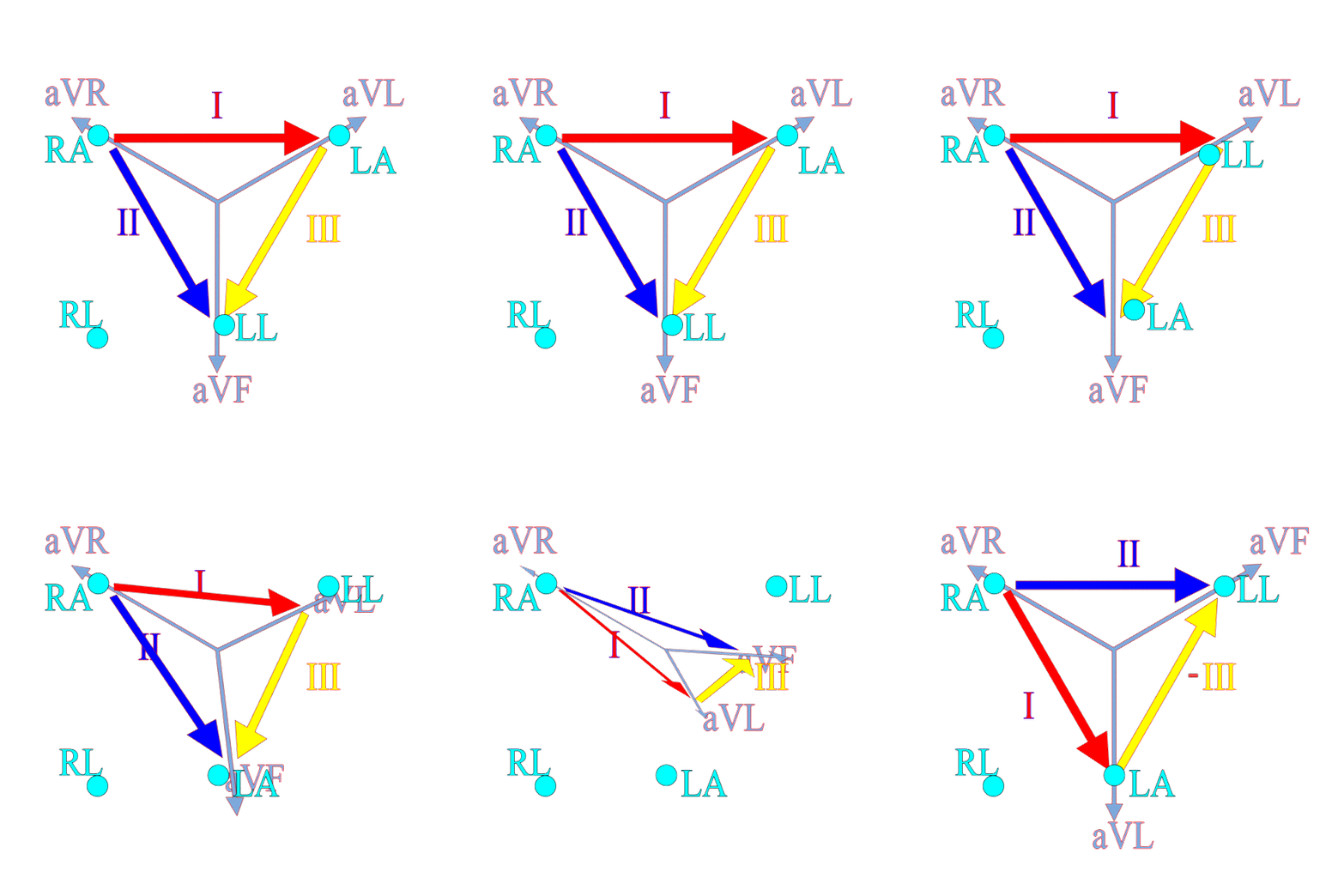
- leads aVL and aVF switch places, but don’t change
- leads I and II switch places, but don’t change
- lead III becomes negative
- lead aVR is unaffected
Swapping the Left Leg and Right Leg

- This changes the neutral from one leg to the other
- lead I would stay exactly the same
- the rest of the leads would change minimally
- no leads would “switch places”
- no leads become inverted versions of the prior placement. (Some might become negative, but wouldn’t be an ‘identical but upside down’ version of the original as would be the case for lead I in a RA/LA lead reversal, for example.)
Swapping the Right Arm and Right Leg
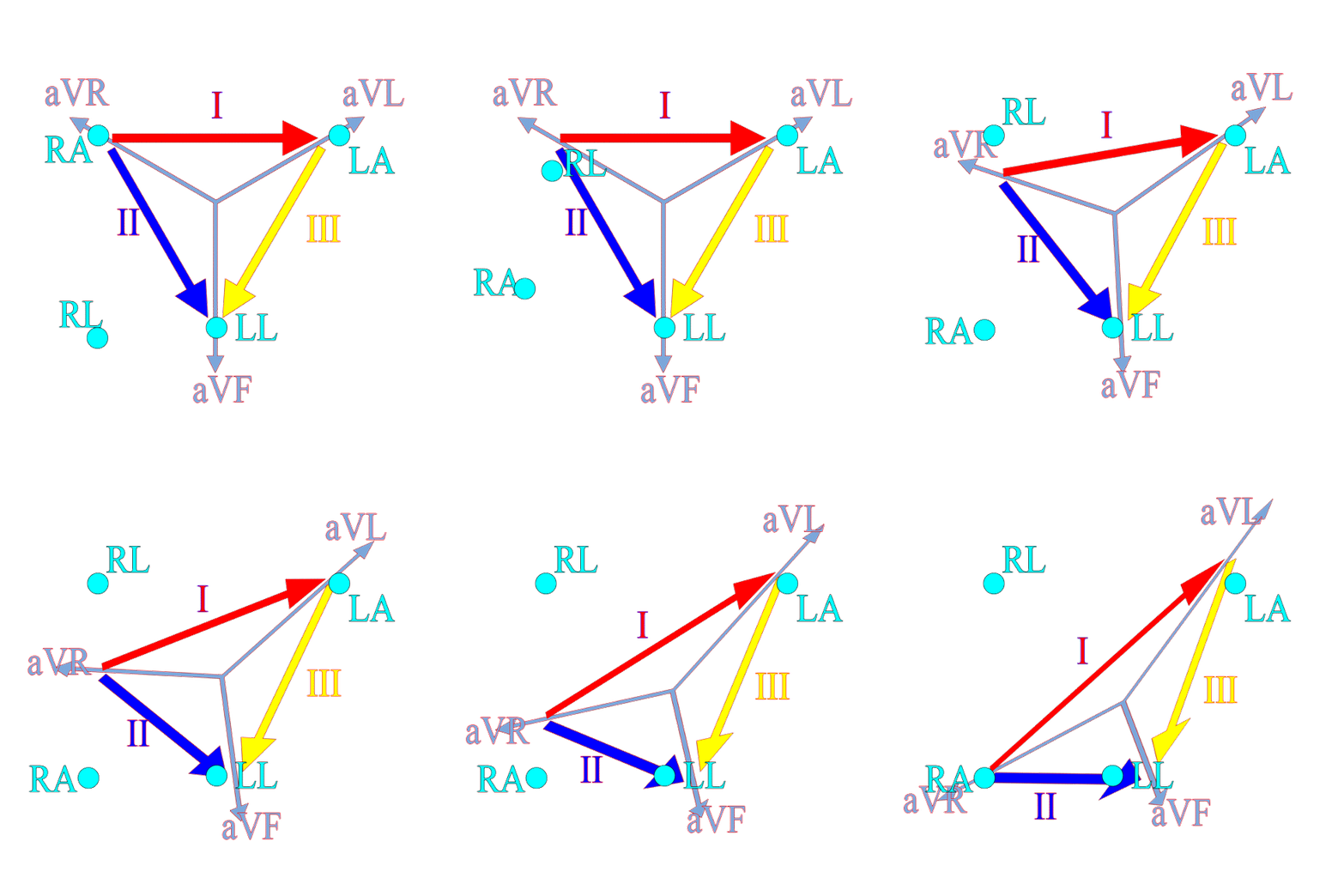
- This would cause the most drastic changes of any of the swaps mentioned here – this ecg would look like the outlier
- lead III would be least affected, if at all
- every other lead’s axis and current would be changed.
You might be asking, “Why do I need to know this?” Strictly speaking, you don’t. But as I’ve said, you don’t have to be able to speak Spanish to order a taco at a Mexican restaurant. Nor do you need to “understand” and ecg to spot a STEMI. If you’d like to understand the language of Spanish, you need to know more than memorizing a few common phrases. That’s what the goal is here – understanding the ecg beyond common pattern recognition.
If this makes sense to you, take a look back at the prior post and see if you sort out which ecg is which lead misplacement now. ECG #3 is the correct one.
Life in the Fast Lane has very detailed description of these lead reversals and more if you are interested.
 Searcy EM